By Greg Clough
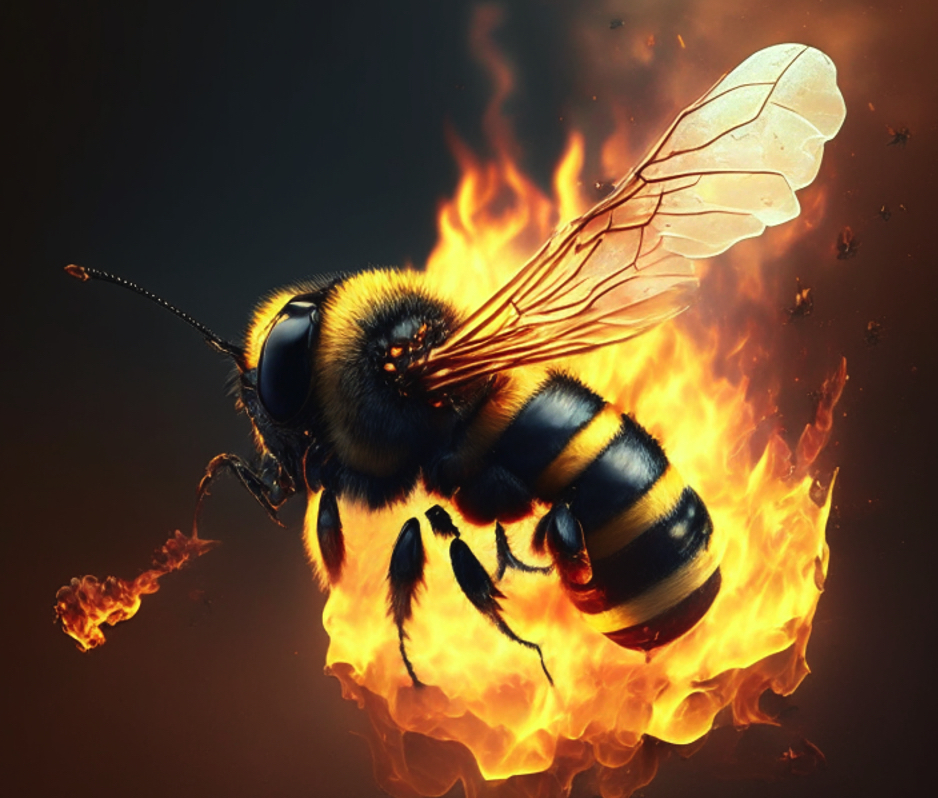
ARTICLE IN PROGRESS: “They’re really important for the environment. Nothing in this world lives by itself, you know. Your Dad should never have done that,” our neighbour, Mrs Trubul, advised me. The trouble with advice is it usually comes too late. Such was the case with the 1971 biodiversity bloodbath in Gaia Street, Frankston.
ARTICLE IN PROGRESS: Looking out the patio window as a teenager, it seemed the front door’s welcome mat had taken wing and landed on the backyard rose bush.
“You kids, again?” Mum demanded. Daisy and I looked accusingly at each other.
“Could’ve blown there,” I wondered aloud.
“Really!!??” Mum said, “Like some magic carpet ride? Okay, Aladdin, go out and return it to the front door.”
It didn’t seem a big ask. Besides, Dad was away, making me the man of the house. I opened the back door and strode with my chest out.
But the more I approached the welcome mat, the less welcome I felt.
The doormat actually hummed like a magic carpet.
It’s only a doormat, I told myself.
But a distinct murmur reached my ears.
Still, from a distance of 20 meters, it had the coconut colour and texture of the doormat we daily wiped our shoes on. Surely it was the one from our front veranda.
Then again, it seemed to be shedding a layer of skin, with flecks of coconut fibre zipping up and around the rose bush.
I tiptoed closer. Then bolted. Bolted like one of Aladdin’s genies fleeing to her bottle. Bolted for the back door.
“Bees, mum! B…B…B…bloody bees! Bloody hive of them!”
“Tsk! Where’s your father when he’s needed?” Mum muttered to the infinite universe.
“Mum, he’s at sea with the Navy, didja forget?” Daisy reminded.
“Really??!!” Mum stared at Daisy. If only she had cast that withering look on the hive, the bees would have fled at the speed of fright.
Dad returned a few days later, after three months sailing the becalmed, blue, bee-less seas of the Orient. The doormat was still terrorising the rosebush.
And us two kids.
Mum had banned us from playing outdoors until Dad fixed the situation.
Fix it he did!
Dad swathed his head in layers of mosquito netting, tied old shoestrings around his trouser cuffs, and slid three socks on each hand. The socks were my fault. I had burned a hole in Dad’s garden gloves shoving penny bunger firecrackers down a a bull ants nest.
And so, with socks for hands, Dad tied an old paint tin filled with oil-soaked rags to a bamboo fishing rod.
“Is Dad gonna fish the bees out?” Daisy asked.
“Not enough hooks,” I explained. In all seriousness.
“Really!!??”
Dad carefully measured a quarter gallon of gasoline. Perhaps a half. Maybe the full gallon. Gas was cheaper than lemonade in those days. Poured it into the paint tin. Fumbled inside his pocket. With socks for fingers, getting a single match out of a tiny box isn’t easy.
After taping over all gaps under external doors and ensuring all the windows were tightly closed … thrice … we kids and mum pulled up chairs and began peering into our very own backyard cinema. This would be more fun than bombing bull ants.
Daisy suggested firing up some popcorn.
“Really?” said Mum and I.
Lock and load time. Dad fumbled the match alight. Harrumph! The paint tin exploded. The flecks flittering the air around the rose bush paused, then returned to their naive buzzing.
At first, Dad stood en garde! Navy parade style. Then came the first thrust. His wool-covered hands jabbing viciously. The bamboo rod piercing the beehive’s defences. The tin’s flames seizing the hive’s underbelly.
The oily rags laid smoke across the battlefield, veiling the hive’s angry contortions and camouflaging Dad’s feints and lunges. But these bees weren’t the bumbling kind. They’d read Sun Tzu’s Art of War.
A thousand sentinels swarmed back. Time for Dad to parry. Swats rained down, snatching bees in ham-fisted socks. Kung-fu kicks flew harmlessly at the kamikazes dive-bombing his ankles. By now, all 80,000 bees knew they were under attack. The hive buzzed at full wail, like a whirring air-raid siren. The bees’ monstrous bombination roared across the yard.
If Cleopatra’s face launched a thousand ships, it seemed Dad’s launched a thousand stings. They raged at him in full bee-lives-matter mode. And they do, just like Mrs Trubu later told me.
The paint-tin-flamethrower spewed forth its blazing inferno. The skies over Gaia Street seared with flaming wings and smoke-trailing, plummeting bodies of once brave bees. The garage roof rattled with the staccato of crashing cadavers.
Still they dived, swooped and plunged. Oblivious to their impending death. “Suicide bombers never say die!” squealed Daisy.
“Really!!??” Cheering for the enemy?”
Like a thousand Rocky Balboas, the bees punched back. Bobbing and weaving. Swarming hooks and teeming upper cuts. Around, over, across Dad’s arms, shoulders, thighs, buttocks. But not landing any fatal blows. Slowly the swarming faded. Slowly the bee spirit died. Slowly the hive fell apart in smouldering clumps.
“That’s it dad, sting like a butterfly!” Wailed Daisy.
“What!”
In such moments, the weight of impending defeat hangs heavily in the air. The signs unmistakable. It starts with a flicker of doubt, a hesitation in the eyes of the soon-to-be vanquished, a sinking feeling in the thorax. And so it was for the bees of Gaia Street.
Dad stood firm. Like he had learned fighting in Korea. The battle wasn’t quite over. Almost. But not fully. Time to bring in the reinforcements. Time for the knock-out blow.
“Made my day, dad,” I shouted.
“Really!!??” said Daisy and Mum.
They didn’t bother me. Dad was going nuclear. He was about to split the atom. Another gallon filled the tin. Liquid flames poured across the hive’s ramparts and parapets.
Boom! A Nagasaki nightmare! Napalm for nectar!
And that was it.
The droning, buzzless silence was deafening.
“Hasta la vista, bee-bee!” shouted Mum.
“Really!!??” laughed Daisy and me.
The remaining few bees fled, humming a low, haunting retreat. Their battle was over. They’d fight another day from another rose bush. As for our rose bush, it was collateral damage, never to blossom again – whether in silent protest, out of shame, or from PTSD, not even an arborist would know.
With their wings crisp and bodies fried, thousands of dead bees littered the back lawn like parched raisins. Each blade of grass a headstone. Our bare feet crushed bee cinders for weeks. Not even the magpies would eat them. It was the Western Front for insects. All was quiet.
ARTICLE IN PROGRESS. Epilogue: This is a true story. It’s exaggerated, highly, and seeks humour where it probably shouldn’t. But in essence, it’s true. My father did don socks for gloves, fill a tin with gasoline and attack a harmless beehive in our backyard. Mum, my sister and I did watch it, enthralled, from behind the patio window. Dad was not to know how dreadful his actions were. Nor were we.
But Mrs Trubul did. She grew up on a farm.
She explained that swarms of bees pause in locations for a few days while searching for a new home. They camp on a tree branch or a fence post, forming a cluster with the queen bee at the centre and the scout bees coming and going, reporting on potential nest sites. Once all the scouts agree on the best place for their new hive, the bees will swarm almost squadron-like to their new permanent home.
When bees swarm like this, they are usually docile. They are engorged with the honey to stock their new hive, making it difficult to bend their abdomens to sting. Their primary goal is to find a new home, not to engage in aggressive behaviour.
We also learned at school how bees carry pollen from flower to flower, fertilising a huge variety of plants and trees. And we understood how this applied to the fruit and vegetables we ate. But that was about all we knew.
If Mrs. Trubul were alive today, she would explain why bees are important in greater detail than we knew at the time.
She would say it’s not just about pollinating apple trees. She would say that transferring pollen between plant species strengthens forests, meadows and wetlands. She would say forests, meadows and wetlands are habitats that provide shelter and food for frogs, birds and all sorts of wildlife, even bull ants. She would say bees helping wildlife and plants and living organisms bolsters biodiversity. She might even say bees enhance ecosystem stability in the face of the world’s climate crisis.
Yes, if Mrs Trubul were alive today, she might have said all those things.
But back in the 1970s, even if we had read Rachel Carson’s Silent Spring and understood what the author meant by ‘In nature nothing exists alone’, we didn’t know about biodiversity or ecosystems.
We didn’t know about the links, the, the symbiosis, the very literal interdependence between different species and their environments.
A 15-year old didn’t know that, like bees, bull ants carry plant seeds or pollen on their bodies, contributing to seed dispersal and cross-pollination between plants. That in nature nothing exists alone.
A 15-year old didn’t know that bull ants aerated the soil, allowing for better water infiltration and nutrient circulation for plants and trees. That in nature nothing exists alone.
A 15-year old didn’t know that bull ants keep the environment in balance by eating other insects that damage crops and other plants. That in nature nothing exists alone
A 15-year old didn’t know that bull ants helped keep the environment healthy by being eaten by birds, reptiles and amphibians. That in nature nothing exists alone
And, in the end, a 15-year old playing bare foot in the backyard knows what it’s like when a bull ant stings.
My Dad told me the only good snake is a dead snake. Ipso facto, the only good bull ant was a dead bull ant.
Fathers and sons.
In nature nothing exists alone.
Really.
And in the end.
Bees face numerous threats, not only Molotov cocktail throwing Dads — but far more likely — habitat loss, climate change, and pesticides. It is important to protect bees so that they can continue to pollinate plants, produce honey, and help to combat climate change.
Here are some things we can do to help bees:
• Plant bee-friendly flowers in the garden.
• Avoid using pesticides.
• Support beekeepers.
• Educate others about the importance of bees.
The bee facts
Some interesting facts about the economic value and environmental importance of bees:
- Bees are responsible for pollinating one-third of the world’s crops. This includes fruits, vegetables, nuts, and seeds that make up a large portion of our diet.
- The economic value of bees is estimated to be $235-577 billion per year worldwide. This includes the value of honey, beeswax, queen and bee colonies, pollen, royal jelly, bee venom, and propolis in cosmetics and medicine.
- Bees are important for maintaining biodiversity in ecosystems. They help pollinate wildflowers and other plants that provide food and habitat for other wildlife.
- Bees are also important for maintaining soil health. They help pollinate clover and other plants that fix nitrogen in the soil.
- Bees are threatened by habitat loss, pesticides, climate change, and disease. The decline in bee populations could have serious consequences for our food supply and the environment.
Some useful sources of information about bees
Bees and their role in forest livelihoods
Pollinators vital to our food supply under threat
The importance of bees to humans, the planet, and food supplies
 ECLECTIC ELECTRIC